
High-Rise Bat Removal in Idaho
Idaho Fish and Game's current guidance for a bat colony in a building identifies early September through mid-October as the best time for exclusion. For a tall building, that makes advance inspection especially useful. We can map the openings and access route before that work window arrives.
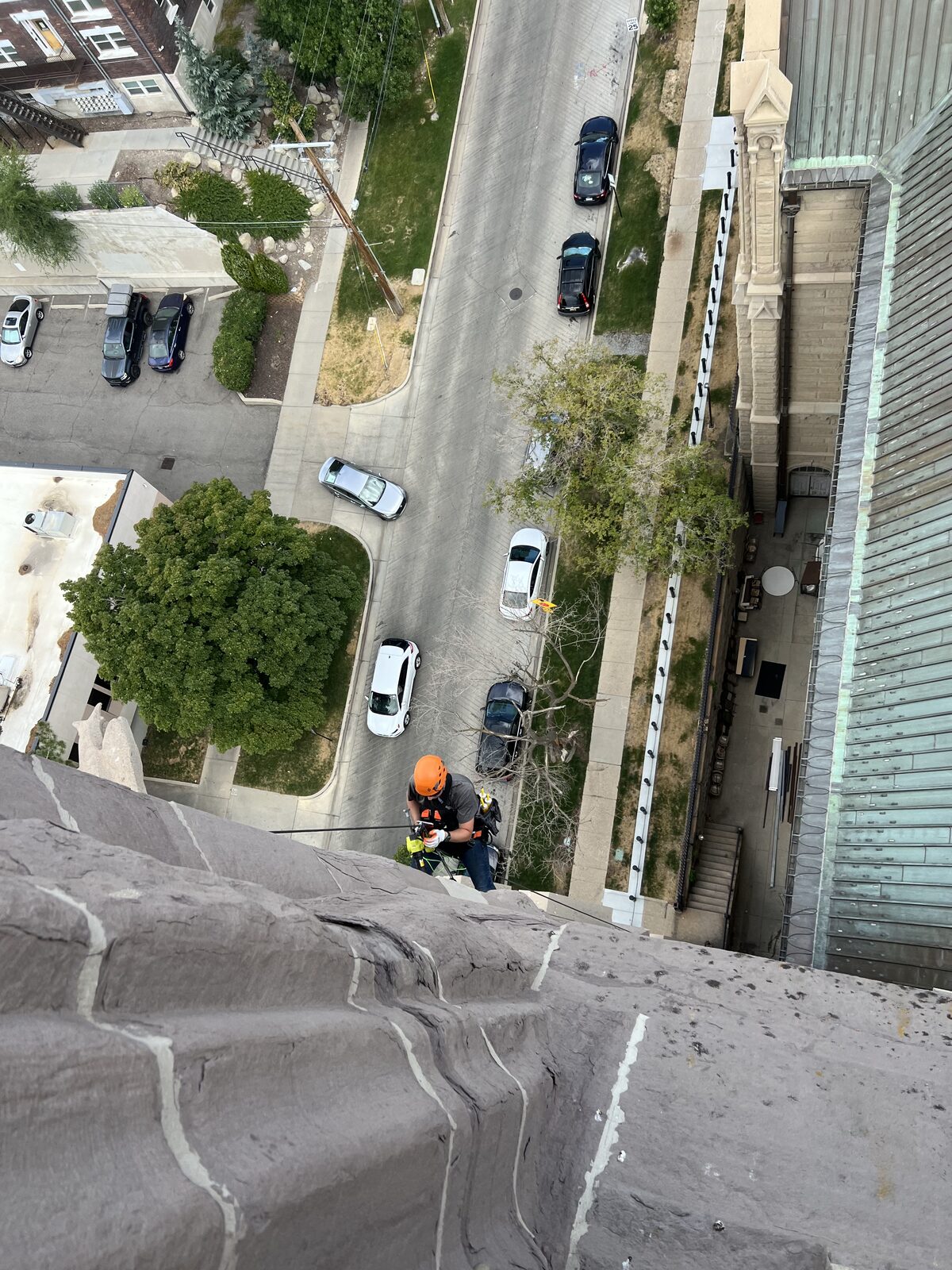
A high-rise scope should be ready before exclusion begins
Roof access, anchor locations, tenant notices, and repair materials can take longer to approve than the exclusion itself. An early survey gives an Idaho property manager a defined scope rather than a last-minute request when the calendar opens.
The wall inspection follows parapets, masonry joints, vents, roof screens, and exterior penetrations near the active roost. It also identifies adjacent gaps that should be closed while technicians already have access.
A work plan built for Idaho
Build the fall-ready scope
The initial survey records bat activity, roof access, affected elevations, and repair quantities before Idaho's preferred exclusion period.
Compare repeated building details
Parapets, vents, wall joints, and connected wings are checked for the same opening pattern around the active roost.
Use IDFG's building-colony window
For a colony in a building, one-way exits are scheduled from early September through mid-October, the period in current Idaho Fish and Game guidance, unless a public health threat changes the response.
Complete closures before winter
Final openings and approved nearby defects are repaired while roof and wall conditions remain workable.
One colony can involve more than one roof or wing
Hospitals, schools, apartment communities, and commercial campuses may have connected roofs or repeated construction details. The survey notes where activity is confirmed and where the same detail should be checked on a neighboring wing.
That does not mean every gap receives the same repair. Active exits, maintenance defects, and interior-safety concerns are listed separately so the owner can phase the work without losing the exclusion sequence.
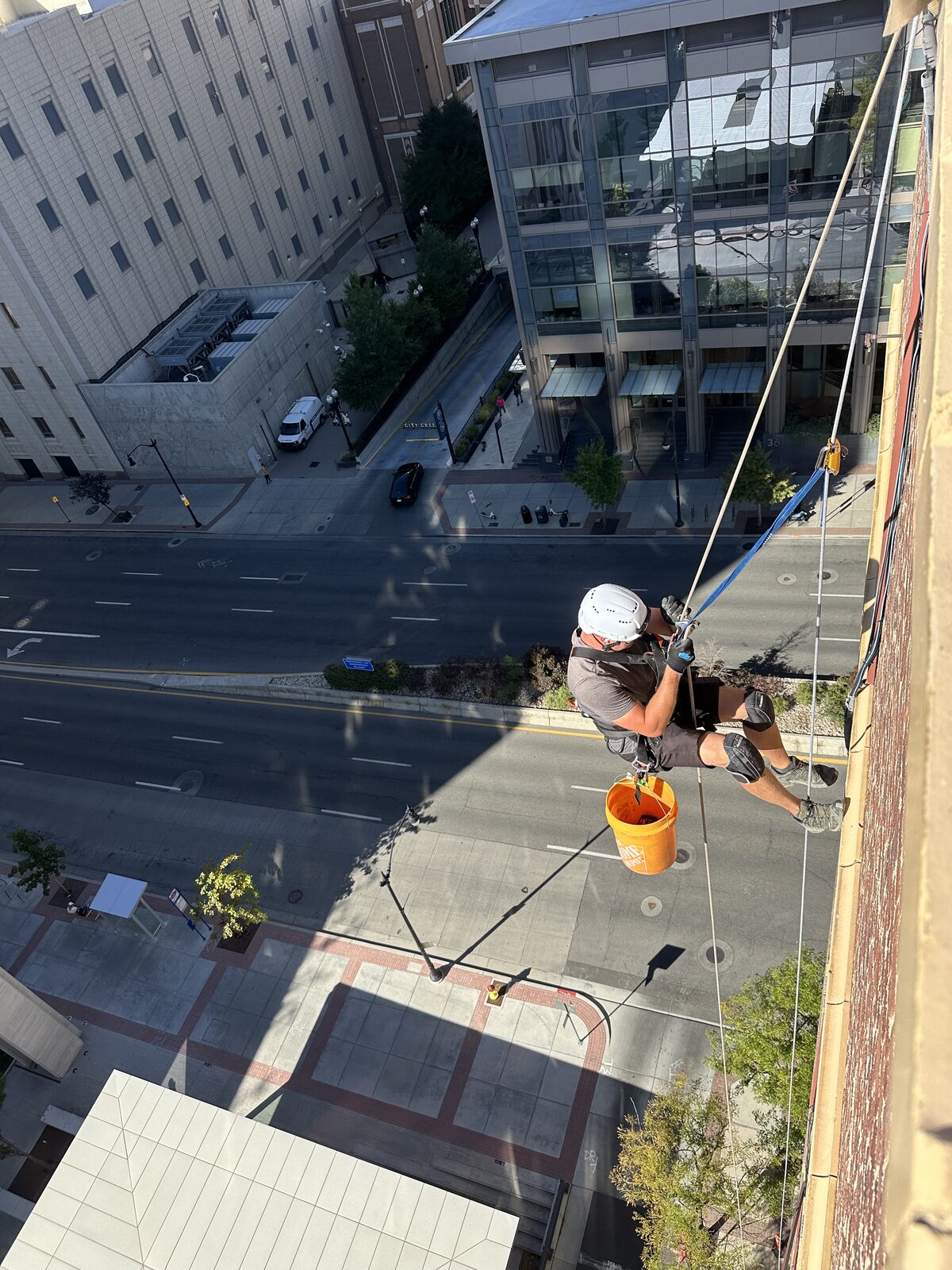
What upper-story bat exclusion looks like
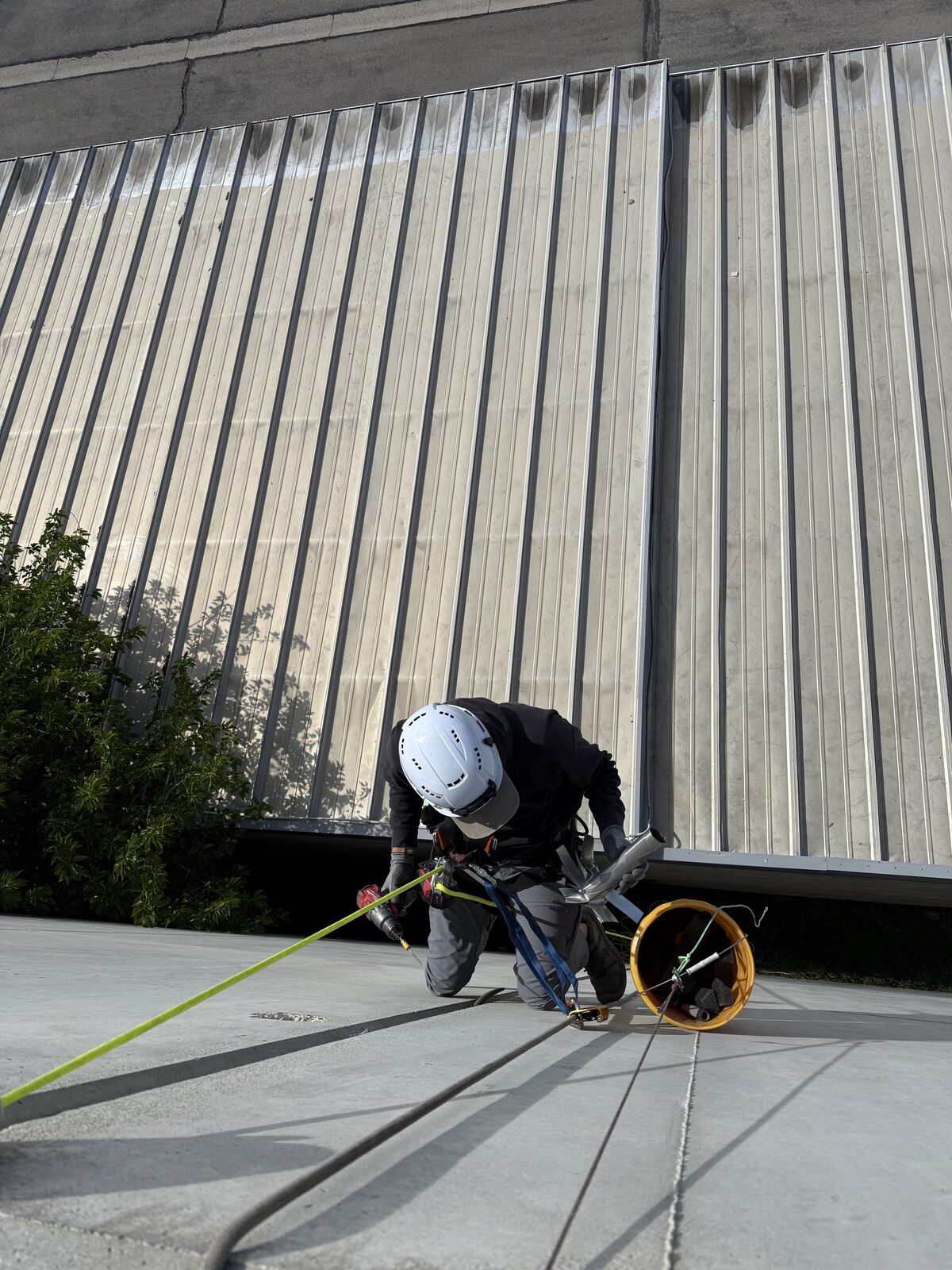
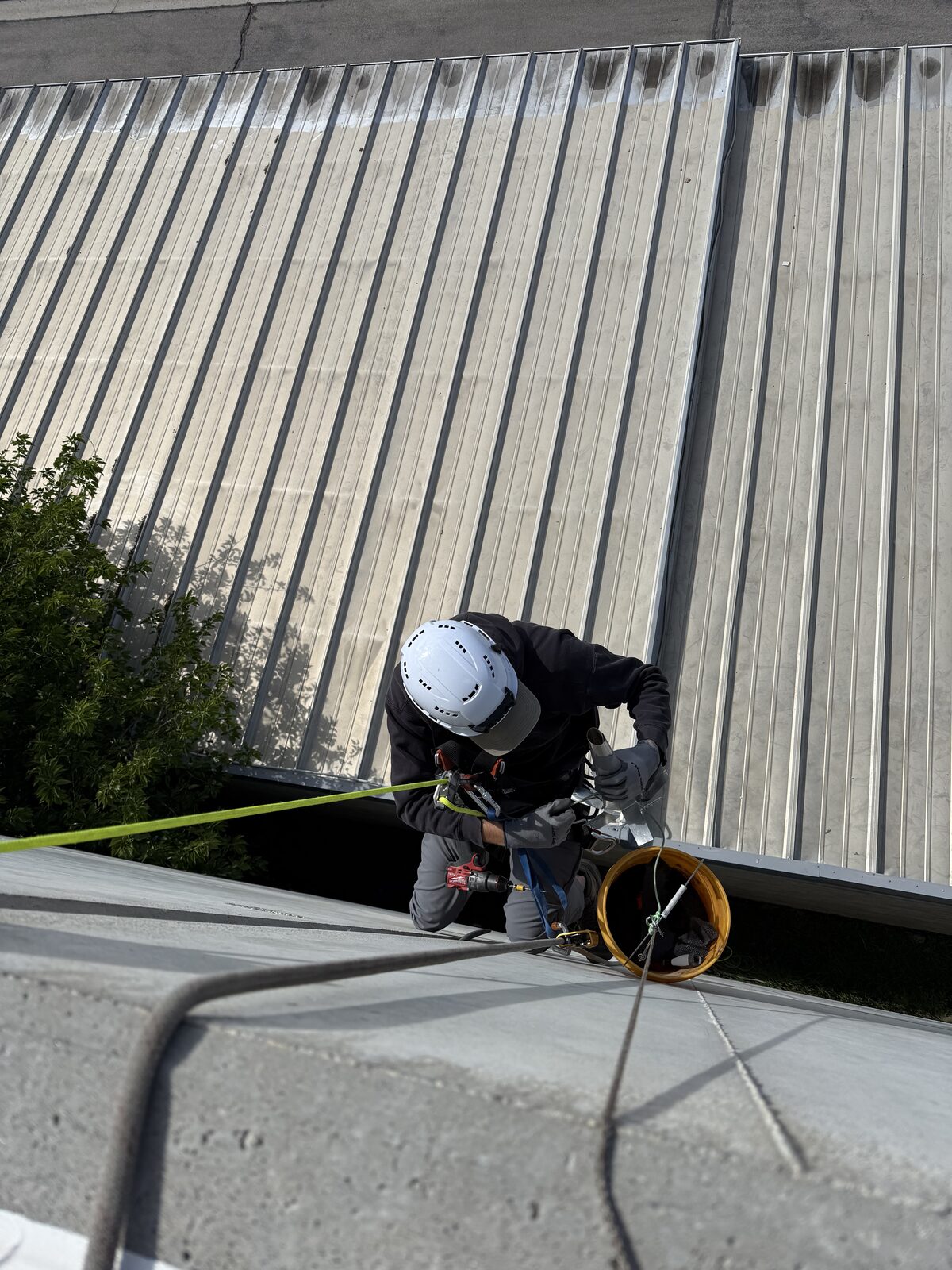
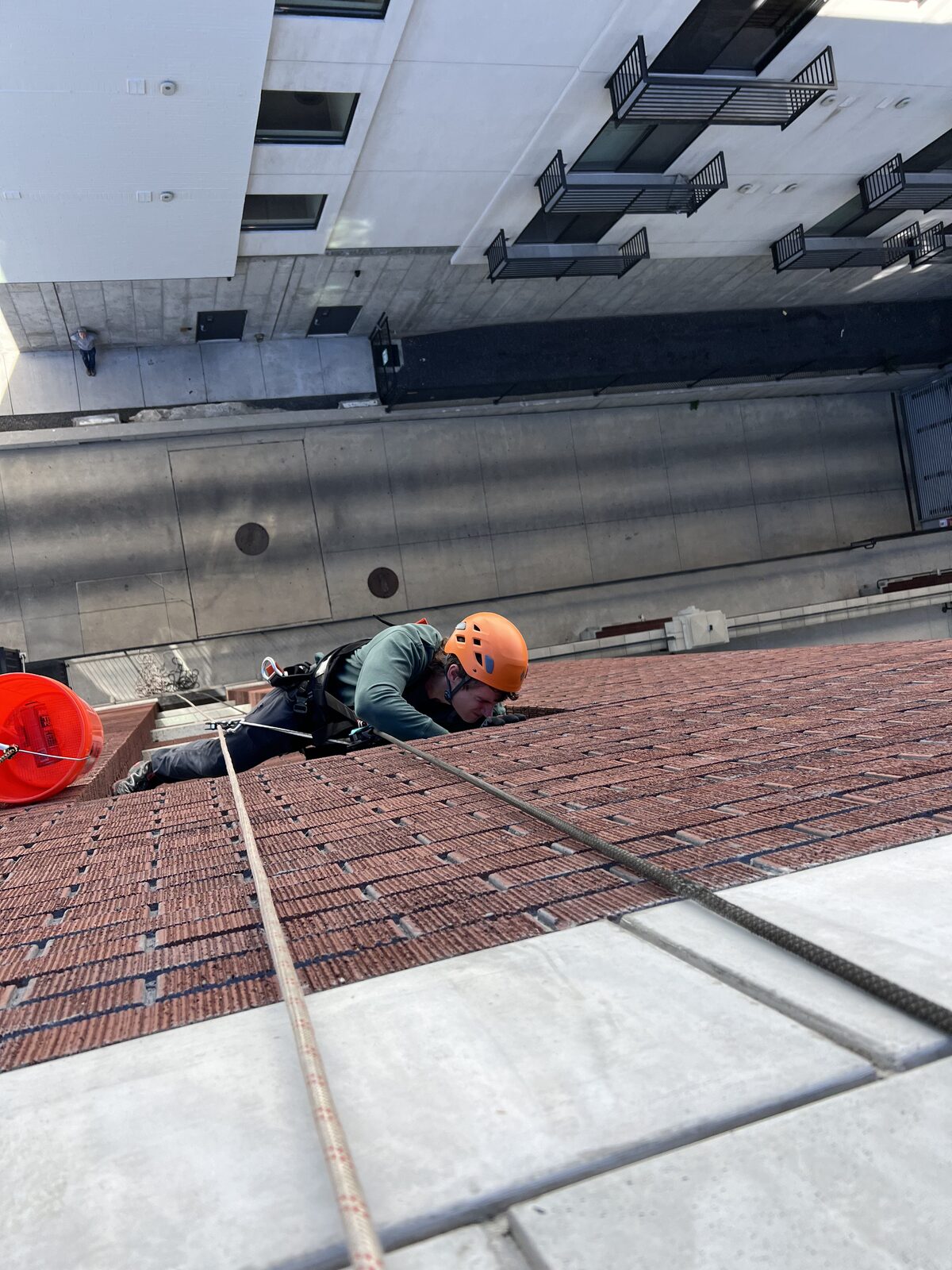
These photos illustrate rope-access methods used to reach upper-story building exteriors. They were photographed outside Idaho and are not project documentation from an Idaho Wildlife Specialists job.
Idaho recommends a narrow early-fall period
For a bat colony in a building, current Idaho Fish and Game guidance says the best time to evict and exclude bats is early September through mid-October, after maternity season and before hibernation, unless there is a public health threat.
That building-colony recommendation is narrower than general seasonal ranges published elsewhere. Inspection can begin earlier so the owner has time to approve access, order building-specific materials, and schedule the work before winter conditions reduce the available days.
Idaho high-rise planning questions
Why inspect an Idaho high-rise before early September?
Idaho Fish and Game's current recommendation for a colony in a building is specific: early September through mid-October. An earlier inspection gives the owner time to approve roof access, repairs, notices, and materials before work is scheduled.
What happens if the building misses the early-fall window?
The next step depends on bat activity, weather, hibernation conditions, and any public health concern. Idaho Fish and Game can provide guidance on the timing of a specific colony.
Can you survey several buildings on the same campus?
Yes. The scope can compare confirmed activity with repeated construction details on connected or nearby buildings, then separate active work from preventive maintenance.
How do snow and roof conditions affect the job?
Safe roof and wall access require workable surfaces, visibility, and weather. That is one reason the inspection and approval work should happen before the preferred exclusion period.
Does every visible gap need a one-way device?
No. One-way devices belong on active exits. Inactive defects can be sealed directly, but only in a sequence that does not cut off the colony's route out.
Idaho bat services and guidance
Preparing an Idaho building for fall exclusion?
Call before the preferred work period with the affected floor, recent activity, and roof-access information. We can develop the scope while there is time to schedule it.